
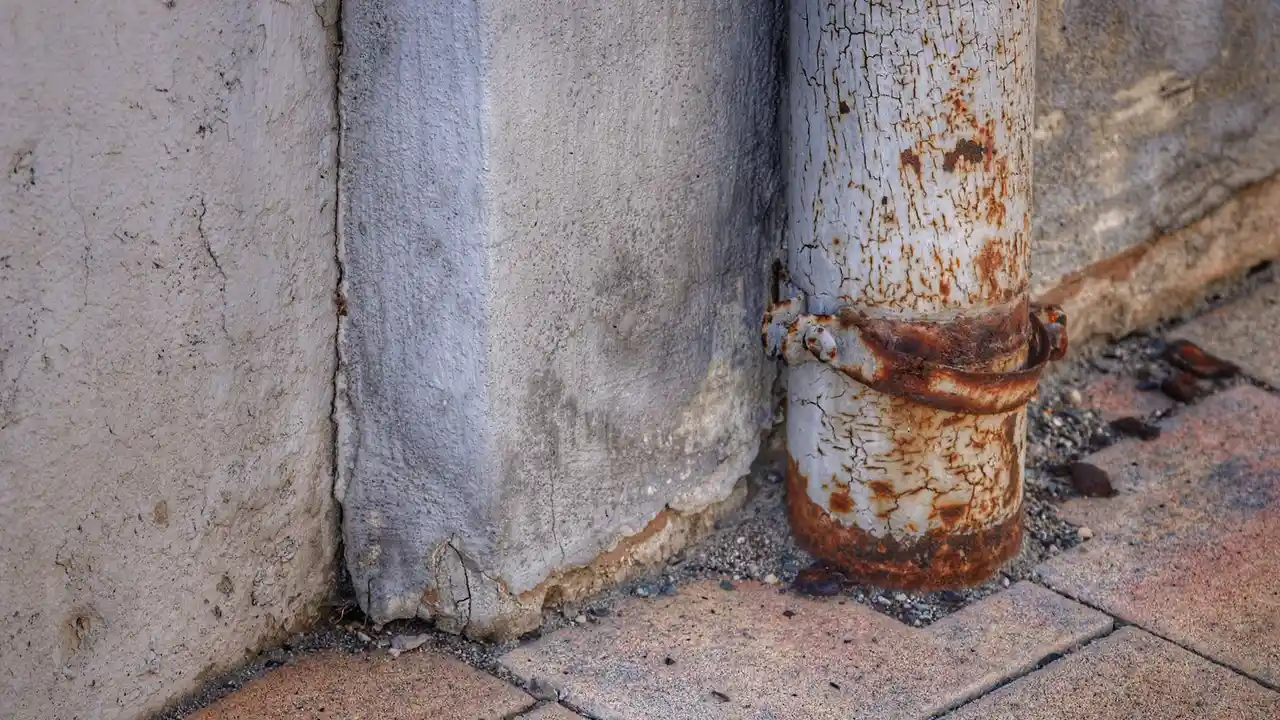
Why recurring leaks, rusty water or repeated clogs in an older home's original plumbing in Sun City homes
Recurring leaks, rusty water and repeated clogs in an older home's original plumbing happen because the pipes themselves are at or past the end of their service life, not because one fixture keeps failing. In Sun City, the combination of hard water, hot desert conditions and original copper supply lines and cast iron or early plastic drains means the whole system is wearing out at once, so fixing one spot rarely stops the next problem.
This page explains why that happens here, what it looks like in a home, what you can safely do yourself, and when the repair has become a replacement decision.
What makes this common in Sun City
Sun City's housing stock sits at the age where original plumbing materials begin failing in clusters. The median home was built in 1993, and 7% of homes were built in 1959 or earlier, which means a large share of houses were plumbed with copper supply lines and cast iron or early plastic drains that are now 30 to 60 years old, a pattern we cover in our blog.
Copper supply lines and cast iron drains have a known service life. Copper thins from the inside as water chemistry and minerals attack it, and cast iron rusts from the inside out until the wall of the pipe is gone. Once a system reaches that point, failures stop being random and start coming in groups.
The local climate and water add pressure to that timeline. Sun City water is hard, often in the range of 15 to 25 or more grains per gallon, and hard water leaves mineral scale behind everywhere it sits. That scale narrows pipes, insulates water heaters, and gives debris something to catch on, which is why clogs return in the same line even after it has been cleared.
The result is that a homeowner here faces repair versus replacement decisions that newer neighborhoods will not see for decades. A single leak can be repaired, but a pattern of leaks, rusty water and repeat clogs usually points to the material itself, and that is a different conversation, one that often starts with water leak repair.
How the local conditions cause it
Sun City's conditions cause plumbing failures through three connected mechanisms: mineral scale from hard water, internal corrosion of aging metal, and ground movement that stresses buried lines. Each one acts on a different part of the system, and together they explain why problems recur rather than resolve.
Hard water is water carrying dissolved calcium and magnesium. When that water is heated or sits in a pipe, the minerals come out of solution and stick to the inside surface as scale. Scale narrows the inside diameter of a pipe, so the same flow moves through a smaller opening. It also makes the pipe surface rough, and rough surfaces catch soap, hair, grease and food debris, which is how a drain that was cleared last year clogs again this year in Youngtown, AZ.
The water supply system carries that hard water under pressure to every fixture. In older copper lines, the inside of the pipe corrodes and thins, and pinhole leaks form where the wall has given way. Rusty or discolored water usually means corrosion is already happening somewhere in the supply side, often in a galvanized section or in the water heater tank itself.
The drainage system and the sewer system handle what leaves the house. Cast iron drains rust from the inside, and the rough, pitted surface traps waste. Early plastic drains can crack at joints or sag where support has failed. Tree roots find their way into cracks in the sewer line, especially in mature landscaping, and roots grow back after they are cut, which is why a sewer clog can return within a season.
The water heater sits at the center of all of this. Hard water scale settles on the tank bottom and on the heating element or burner surface, so the heater works harder, heats more slowly and eventually fails. A water softener or other water treatment reduces the mineral load reaching the heater and the pipes, which slows scale buildup but does not reverse corrosion that has already happened.
The soil here is clay loam with about 27% clay, which is low enough in clay that seasonal ground movement is limited. That matters because it means buried pipes are less likely to be shifted and cracked by expanding and shrinking soil than in heavier clay areas, so when a buried line fails here it is more often age, corrosion or root intrusion than ground movement.
Rainfall is not the main driver either. Annual rainfall averages about 10 inches, with July the wettest month and only about 2 days a year receiving an inch or more. Drainage systems are under the most load on those heavy rain days, but the recurring problems homeowners see are usually happening year round, which points back to the pipes rather than the weather.
What it looks like in a home here
What it looks like in a home here is a pattern rather than a single event: the same drain clogging again, water with a brown or orange tint, a damp spot that keeps coming back, or pressure that drops when more than one fixture runs. Recognizing the pattern is what tells you whether you are dealing with a fixture problem or a system problem.
Recurring clogs usually show up first in the lowest drains in the house, because waste and water collect there. If a sink, tub or toilet clogs repeatedly and clearing it only buys a few weeks or months, the restriction is likely in the branch line or the main sewer line rather than at the fixture. Gurgling sounds from other drains when one is used, or water backing up in a tub when the toilet is flushed, point to a shared line.
Rusty water has two common versions. If the discoloration appears only when you first turn on a tap after it has been off for hours, the corrosion is likely in your own supply piping. If it appears from the hot side only, the water heater is the likely source. If it appears from every fixture at once, the problem is upstream of the fixtures, in the supply system or the main line.
Leaks in a slab-on-grade home often do not show as a puddle. They show as a warm spot on the floor, a water bill that climbs without a change in use, a sound of running water when nothing is on, or a stain that keeps reappearing on a wall or baseboard. A slab leak is a leak in a pipe running under or through the concrete floor, and it is common in older single-story homes with original copper lines.
Low water pressure is the quiet symptom. When scale and corrosion narrow the inside of the pipes, pressure drops gradually, so homeowners often adapt without noticing until a shower or a sprinkler no longer performs the way it used to. Pressure that drops only when a second fixture runs is a supply-capacity symptom, not a fixture symptom.
Mature landscaping is a factor in the sewer system. Roots from established trees and shrubs enter sewer lines through joints and small cracks, and once inside they grow into a mass that catches waste. A camera inspection shows where the pipe has cracked or where roots have entered, which is the only reliable way to tell a root problem from a collapsed or bellied line.
What to do when it happens
What to do when it happens depends on whether you are facing an active problem or a recurring pattern, and the first step in both cases is to stop making it worse. Do not pour chemical drain cleaner into a drain that has already clogged more than once, because the chemicals sit against standing water and can damage older pipes without clearing the cause.
For a slow or clogged drain, work in this order:
1. Remove the stopper or strainer and pull out visible hair or debris with a tool or gloved hand.
2. Run hot water for a minute to see whether flow improves, which tells you whether the blockage is soft or hard.
3. Use a plunger sized for the drain, with the other drains in the room blocked, to push and pull the blockage.
4. If the drain is still slow, stop and note whether other fixtures in the house are also affected. That tells you whether the problem is local or in a shared line.
5. If more than one fixture is affected, or the same drain has clogged before, do not keep plunging. That is a main line or sewer symptom and needs to be looked at with a camera.
For rusty water, run the cold tap for a few minutes and see whether it clears. If it clears and stays clear, the discoloration is likely sitting in your own piping. If it does not clear, or if it only comes from the hot side, the source is likely the water heater or the supply line, and that is a repair decision rather than a flushing exercise.
For a suspected leak, shut off the fixture or the supply valve nearest the problem, then check the water meter with everything in the house turned off. If the meter still moves, water is escaping somewhere in the system. A damp spot, a warm floor or a climbing bill with no visible water is a slab leak symptom and should not be chased by opening the floor yourself.
What you should not do: do not open walls or break up a slab to find a leak, do not use chemical drain cleaners repeatedly on the same line, do not attempt gas line work, and do not ignore a sewer backup that has come back more than once. Those jobs need a licensed plumber, both because of the risk and because permits and code compliance may apply.
If you are dealing with an active leak, a sewer backup or a gas smell right now, the first few minutes matter more than anything else. A first-15-minutes homeowner action guide for active leaks, sewer backups and gas smells before the plumber arrives walks through what to shut off and what to leave alone.
A structured way to decide between repair and replacement is to ask three questions. First, has this same line or system failed more than once in the past few years? Second, is the failed material one that is known to be at the end of its life, such as original copper or cast iron? Third, is the failure in one spot or spread across the system? One failure in one spot usually means repair. Repeated failures in the same material across the system usually means replacement is the better use of money.
What prevents it here
What prevents it here is managing the water and watching the system, because you cannot stop age. The two things a homeowner can actually control are the mineral content of the water and how early a developing problem is caught.
A water softener or other water treatment reduces the minerals that form scale. Less scale means less narrowing in the pipes, less strain on the water heater, and fewer rough surfaces for debris to catch on. Water treatment does not repair corrosion that has already occurred, but it slows the rate at which new damage accumulates, which is meaningful in a system you are trying to keep working.
Flushing the water heater on a maintenance schedule removes sediment before it hardens on the tank bottom. In hard water areas, sediment builds up faster, and a heater that is strained by scale fails sooner than one that is maintained. This is routine maintenance rather than a repair, and it is one of the highest-value habits for a home with hard water.
Watch the water bill. A bill that climbs without a change in use is one of the earliest signs of a hidden leak, and catching a leak early usually means a smaller repair. Reading the meter with everything off once a month takes a few minutes and gives you a baseline to compare against.
Pay attention to pressure. If pressure drops gradually over months, scale and corrosion are narrowing the lines. If pressure drops suddenly, something has changed in the supply. Either way, the change is information, and noting when it started helps a plumber find the cause faster.
For drains, the preventive habit is to keep grease, coffee grounds, fibrous food and wipes out of the system entirely, and to use strainers in kitchen and bathroom sinks. For the sewer line, the preventive step is a camera inspection if the home has mature trees or the line has clogged before, because roots grow back and a line that has been cleared once will usually need attention again.
If the decision has come down to replacing aging pipe, the method matters as much as the decision. What trenchless methods are available for sewer and water line repair, and when are they appropriate? explains how lines can sometimes be replaced with far less digging, which is often the difference for a homeowner who does not want a torn-up yard.
When to call a professional
It becomes a job for a licensed professional when the problem is in the system rather than at a fixture, when it involves gas, or when the same failure keeps returning. Those are the points where a repair by a homeowner either cannot reach the cause or is not safe or legal to attempt, so get in touch with us.
Recurring clogs in the same line are a professional job because the cause is usually inside the pipe, where you cannot see it. A camera inspection shows where the pipe has cracked, where roots have entered, or where the line has bellied, and that determines whether the fix is clearing, repairing or replacing. Clearing a line without knowing why it clogged is what leads to the same call next season.
Rusty water from the hot side, a water heater that is not heating properly, or a heater that is leaking is a professional job. Water heater work involves gas or electrical connections, pressure relief, and code requirements, and a failed tank can cause significant water damage if it lets go.
Any gas work is a professional job, without exception. Gas plumbing involves leak detection, code compliance, permits and real safety risk, and it is not something to diagnose or repair yourself.
A suspected slab leak, a sewer backup that has returned, or low pressure across the whole house are professional jobs because they require detection equipment to locate the problem before anything is opened. Opening a slab or a wall on a guess is expensive and usually wrong.
A licensed plumber is also the right call when the decision is repair versus replacement. That decision depends on the material, the age of the system, how many failures have occurred and where, and what the local code requires for the replacement. A plumber with a master plumber on staff can evaluate the whole system rather than the one failed section, which is what keeps you from paying for the same problem twice.
Plumber Sun City works on water supply, drainage, sewer, gas and water quality systems in Sun City and the surrounding areas. The business offers a Clean House Guarantee and a Clog-Free Guarantee, and it has a master plumber on staff. If you are weighing a repair against a replacement, the service this explains is pipe replacement, and the phone number is 6234321414.
Frequently asked questions
Recurring leaks, rusty water or repeated clogs in an older home's original plumbing are usually caused by the pipe material itself reaching the end of its service life, not by anything the homeowner is doing wrong. Copper supply lines develop pinhole leaks and internal corrosion, while cast iron drains rust from the inside out and rough up until waste catches on the walls. That is the short answer, and it explains why the same problem keeps coming back after a repair.
A repair fixes one spot. It does not change the age or condition of the rest of the pipe. A pinhole leak patched on one section of copper tells you nothing about the thin walls a few feet away, and a drain snaked clear today will clog again if the pipe interior is scaled or cracked. This is why homeowners here often describe the same line failing three or four times in a couple of years. The pattern is the pipe, not the fix, which is why leak detection and repair looks at the whole line.
Hard water at 15 to 25 grains per gallon leaves mineral scale on the inside of every pipe it touches. Scale narrows the opening, slows flow and gives debris something to grip. A water softener or water treatment system reduces that buildup, but it cannot undo scale already bonded to old pipe. If the scale is thick, the pipe may need replacement even though it is not leaking yet.
Rusty water in the morning that clears after a few minutes is often the supply line shedding corrosion from the inside. Rusty water that stays brown all day, or arrives with a metallic taste, points to a larger section of failing pipe or a water heater with a corroded tank. Either way, the color is a symptom of metal breaking down, not a water quality problem you can filter away.
A single clog that clears and stays clear is normal. Repeated clogs in the same drain, leaks that return within months, and water pressure that drops across the whole house are the signs that repair is no longer the right answer. At that point the decision shifts to replacement, and a plumber can show you which sections are worth saving and which are not.
Gas lines and sewer work are not do-it-yourself jobs. Gas leaks, sewer line repairs and anything requiring a permit or a licence belong to a licensed professional, and working on them without that is dangerous and often illegal. For everything else, the practical step is to document what you see, when it happens and how often, so the person who inspects the system starts with facts instead of guesses.
Frequently asked questions
Why Recurring leaks, rusty water or repeated clogs in an older home's original plumbing in Sun City homes
They happen because the original pipes are at or past their service life, and hard water accelerates the wear. Copper supply lines corrode and thin from the inside, cast iron drains rust and roughen, and mineral scale narrows both, so failures come in clusters rather than one at a time.
What is why recurring leaks, rusty water or repeated clogs in an older home's original plumbing in Sun City?
It is a pattern of system-wide failure rather than a series of unrelated fixture problems. When the same drain clogs again, water runs rusty, or leaks keep appearing, the common cause is the material of the pipes themselves, which is why fixing one spot does not stop the next problem.
How does why recurring leaks, rusty water or repeated clogs in an older home's original plumbing in Sun City work?
Hard water deposits scale inside the pipes, which narrows them and roughens the surface, while corrosion thins copper and rusts cast iron from the inside. Scale and rust give debris and roots something to catch on, so the same line blocks again, and thinning metal eventually fails as a leak.
What should I know about why recurring leaks, rusty water or repeated clogs in an older home's original plumbing in Sun City?
You should know that a single failure usually means repair, while repeated failures in the same material across the system usually mean replacement is the better value. Water treatment slows new scale, but it does not reverse corrosion that has already happened, so the decision depends on the age and material of the system.