
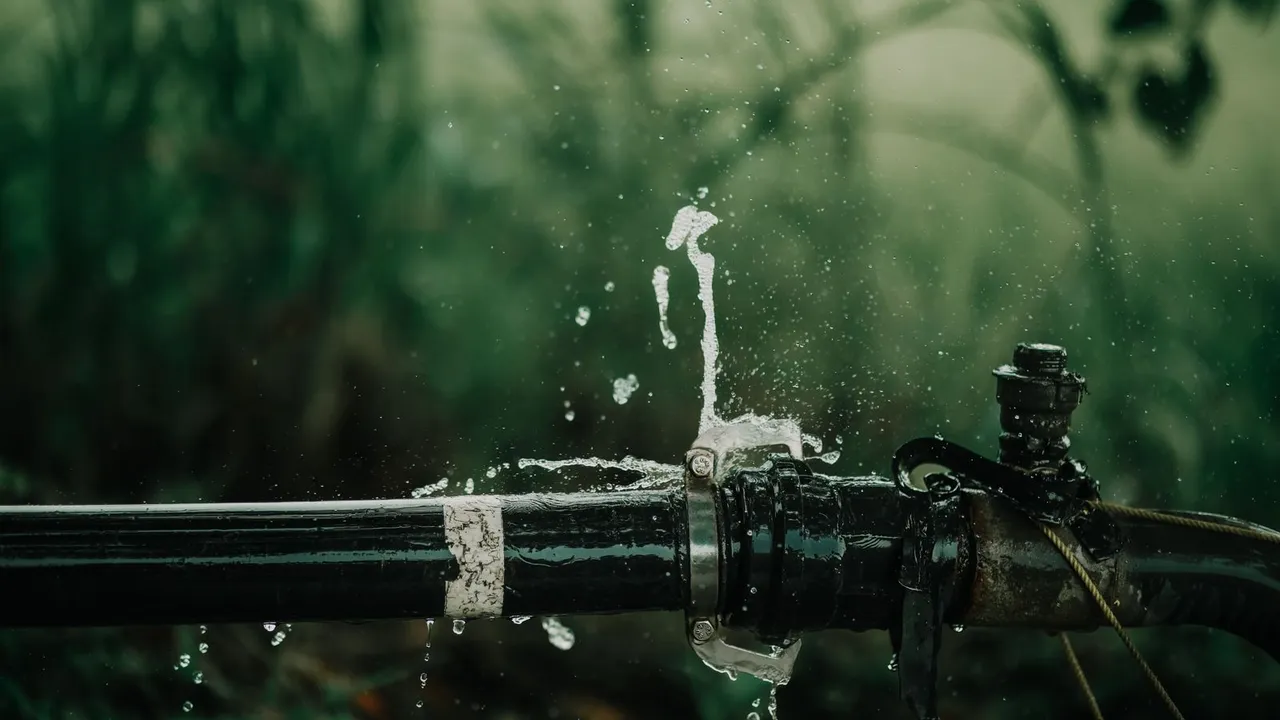
Emergency vs scheduled visit: whether the problem requires immediate response or can wait
A plumbing problem is an emergency when water is escaping, rising, or shut off and cannot be restored safely, because damage is happening right now and will keep getting worse until the flow stops. A problem can wait for a scheduled visit when the symptom is stable: a slow drain, a dripping fixture, a single cold tap, or a softener that is not regenerating, none of which is actively destroying the home. You can find more on these situations in our blog.
The deciding factor is not how annoying the problem is but whether the failure is active or static. Active means water is moving where it should not, or the supply is lost to the whole home; static means the system is still holding, even if it is performing poorly.
What "emergency" and "scheduled" actually mean in plumbing
An emergency is a condition where the failure is ongoing and the damage compounds by the hour. A scheduled visit is a repair that can be planned because the system is stable in the meantime, even if it is not working perfectly.
Plumbing covers several connected systems: the water supply system that brings pressurized water in, the drainage system that carries waste out of the house, the sewer system that takes it away from the property, gas plumbing, and water treatment equipment. Each system fails in its own way, and each has its own line between urgent and routine.
The test is simple. Ask whether the problem is getting worse on its own. A burst pipe is getting worse. A toilet that runs for a few seconds after flushing is not. A sewer backing into a tub is getting worse. A bathroom sink that drains slowly is not.
This is the same judgment covered in more depth in Emergency plumbing triage: how a homeowner distinguishes an active emergency from a problem that can wait until morning, which walks through the specific symptoms one by one, and our emergency plumbing service puts that judgment to work.
How water behaves when a pipe, fixture, or fitting fails
Water under pressure finds the easiest path out, and that path is not always the one you can see. A supply line runs at household pressure, so a pinhole in a copper pipe can spray a fine mist inside a wall for weeks before it shows as a stain.
Supply-side failures are driven by pressure. When a pipe, valve, or fitting cracks, water leaves the system continuously until the shutoff stops it. The volume depends on the size of the opening and the pressure behind it, which is why a split supply line can release far more water than a dripping joint.
Drain-side failures are driven by gravity and blockage. Water in a drain only moves downhill, so when the pipe is blocked the water has nowhere to go and rises to the lowest open point, which is usually a floor drain, a tub, or a shower base.
The two behave differently in time. A supply leak starts the moment it opens and stops the moment the water is shut off. A drain backup builds as water is used, so it can look fine until someone runs a washing machine or takes a shower.
Reading the water supply system for signs of an active leak
An active supply leak is an emergency when water is visibly escaping or when a meter keeps moving with every fixture off. Both mean the system is losing water right now.
The clearest sign is water where it should not be: pooling at the base of a fixture, a wet cabinet floor under a sink, a damp patch spreading on a wall or ceiling, or a hissing or spraying sound near a pipe. Any of these points to a live leak.
A quieter sign is a water meter that never stops. With every tap, appliance, and irrigation zone off, a meter that still turns indicates water is leaving the system somewhere. That is worth treating as active until proven otherwise.
A drop in pressure at one fixture is usually a local problem, such as a clogged aerator or a failing angle stop. A drop in pressure at every fixture at once points to the supply system itself and deserves a closer look before it is written off as minor.
When a drainage system backup crosses from nuisance to urgent
A drain backup becomes urgent the moment waste water rises into the home rather than draining away. That is the line between a slow drain and a problem that needs immediate attention.
A single slow drain is usually a local clog in that fixture's trap or branch line. It is inconvenient but contained, and it can wait for a scheduled visit if the rest of the house drains normally.
A backup that appears at multiple fixtures at once, or that shows up in a tub or floor drain when you use a different fixture, points to a blockage in the main line. When several fixtures share one blockage, the drainage system is no longer carrying waste away from the house.
Sewage backing up is more serious than clear water because it carries contamination. If waste water is entering the home, keep people and pets away from the area and treat it as urgent rather than waiting to see whether it clears.
Water heater failures: which symptoms are immediate and which are not
A water heater leak or a gas smell is immediate; lukewarm water or a slow recovery is not. The difference is whether the failure can cause damage or danger right now.
Water pooling around the base of a tank heater means the tank or a fitting is leaking. A tank that has begun to leak generally does not seal itself, and the water can damage the floor, drywall, and anything stored nearby, so it is treated as active.
A gas smell near a water heater or any gas appliance is a safety matter, not a repair decision.
No hot water, water that runs out quickly, or a heater that takes longer to recover are performance problems. They are worth fixing but are usually safe to plan, especially when the unit is still holding water and not leaking.
Clogs, slow drains, and the point where waiting causes damage
A clog that only slows a drain can usually wait; a clog that stops a drain completely or affects several fixtures should not wait long. The risk grows with how much water the blocked line is asked to carry.
A single slow sink or tub drain is often a buildup of soap, hair, or grease in that branch line. It is stable as long as water still gets past it, and a scheduled visit is reasonable.
The risk in waiting is pressure. When a line is fully blocked, every use of a connected fixture adds water that has nowhere to go. A blocked main line can back up into the lowest drain in the house the next time a washing machine empties.
Repeated clogs in the same line are a sign of a deeper cause, such as scale, root intrusion, or a bellied pipe. Clearing the clog again treats the symptom, and the choice between clearing and repairing the underlying pipe is covered in Spot fix vs root-cause repair: whether to clear a clog or address the underlying pipe condition.
Hard water, water softeners, and water treatment issues that are rarely urgent
Hard water, water softener, and water treatment problems are almost never emergencies because they affect water quality, not water containment. They are maintenance issues that can be planned.
Hard water carries dissolved minerals, and in this region it commonly runs high enough to leave scale on fixtures, in the water heater, and inside pipes. Scale builds slowly, so the symptoms appear gradually rather than all at once.
A water softener that stops regenerating, runs out of salt, or leaves slippery or hard water is a service issue. The home still has water and nothing is leaking, so it can wait for a scheduled visit.
The one thing worth watching is a softener or treatment unit that starts leaking at its connections. A leaking fitting is a water problem regardless of what the equipment does, and it moves into the active category.
The difference between a contained leak and water inside a wall, ceiling, or floor
A contained leak stays in one visible place and can be caught; a hidden leak travels through the structure and is far harder to judge. Containment is what separates a manageable leak from an urgent one.
A supply line dripping into a bucket under a sink is contained. The water is visible, the shutoff is nearby, and the damage is limited to what you can see.
Water inside a wall, ceiling, or floor is different because you cannot see how far it has spread. A stain on a ceiling can mean a small drip or a pipe that has been leaking for a long time, and the water may be sitting against framing or insulation.
A slab leak, where a pipe beneath the concrete floor is leaking, is a hidden leak by definition. Signs can include a warm spot on the floor, a sound of running water when nothing is on, or a water bill that climbs without explanation.
Loss of water pressure, no water, and what each one tells you
No water at all is more urgent than low pressure, because it usually means the supply has been interrupted, not just restricted. Low pressure at one fixture is often local; no water anywhere points to the supply system.
Low pressure at a single faucet is commonly a clogged aerator or a partially closed valve. It is a small problem with a small fix and can wait.
Low pressure throughout the house can come from a failing pressure regulator, a partially closed main valve, or a supply line that is scaling shut. It is not an emergency by itself, but it is worth diagnosing before it becomes no water.
No water at all can mean a shutoff is closed, a well or municipal supply is interrupted, or a main line has failed. If a neighbor still has water, the problem is likely on your side of the meter, and that is worth treating as urgent.
How to decide: a simple framework for judging urgency at home
Judge urgency by asking three questions in order: is water escaping, is the supply lost, and is the problem getting worse on its own. If the answer to any is yes, treat it as active.
1. Check whether water is where it should not be. Look for pooling, spraying, damp patches, or a meter that keeps moving with everything off.
2. Check whether the whole home has water. If every fixture is dry, the supply system is involved, not just one fixture.
3. Check whether the symptom is changing. A stain that grows, a backup that rises higher, or a sound of running water that will not stop means the failure is active.
4. If all three answers are no, the problem is stable and can be planned. Write down what you see, when it happens, and which fixtures are affected so the visit is productive.
What changes the answer: occupancy, weather, building age, and system type
The same symptom can be urgent in one home and routine in another, because occupancy, weather, building age, and system type all shift the risk. These conditions decide how much time you have.
Occupancy matters because an empty house hides problems. A slow leak in a home that is vacant for months can do far more damage than the same leak in a home where someone notices it the same day.
Weather matters in a hot desert climate because heat and hard water work together. Mineral scale builds faster in hot water, and a system already narrowed by scale has less margin before a small clog becomes a full blockage.
Building age and system type matter because older housing stock often has pipes and fittings near the end of their service life. Slab-on-grade construction, common in single-story homes, puts supply and drain lines under concrete, where a leak is harder to find and repair.
What you can safely do while a problem waits, and what you should never do
While a problem waits, you can reduce the load on the system and keep an eye on it; you should not open walls, work on gas, or force a drain with chemicals you cannot control. Safe steps protect the home without risking injury or more damage.
1. Know where the main shutoff is and confirm it turns. If a leak starts, closing it is the first thing you will need to do.
2. Stop using the affected fixture. If a drain is backing up, avoid running water into that line, including the washing machine and dishwasher.
3. Put a bucket or towel under a slow drip and check it daily for changes in size or speed.
4. Keep the area dry and watch for new stains, soft spots, or a musty smell, which suggest water is spreading.
Do not open a wall or ceiling to find a hidden leak, because you can release trapped water and damage more of the structure. Do not attempt gas repairs, since gas work requires a licensed professional. Do not pour drain chemicals into a fully blocked line, because they can sit against the blockage, damage the pipe, and create a hazard for whoever opens it later.
If you are unsure whether the problem is stable, the safe choice is to treat it as active until someone qualified has looked at it.
Related questions
What is emergency vs scheduled visit: whether the problem requires immediate response or can wait?
It is the decision of whether a plumbing failure is active or static. Active means water is escaping, the supply is lost, or the problem is getting worse on its own, which calls for immediate attention; static means the system is holding and the repair can be planned.
How does emergency vs scheduled visit: whether the problem requires immediate response or can wait work?
It works by checking three things in order: whether water is where it should not be, whether the whole home has lost water, and whether the symptom is changing. A yes to any of those points to an active failure; three no answers point to a stable problem that can be planned.
What should I know about emergency vs scheduled visit: whether the problem requires immediate response or can wait?
The most useful thing to know is that annoyance and urgency are different. A loud but stable problem can wait, while a quiet hidden leak inside a wall or under a slab may not, because you cannot see how far the water has spread.
Does hard water change whether a plumbing problem is urgent?
No, hard water and water treatment issues are rarely urgent because they affect water quality rather than containment. They do matter over time, since mineral scale narrows pipes and builds in the water heater, which leaves less margin before a small clog becomes a full blockage.