
How much drywall, landscaping, or slab access should a homeowner expect during a repair?
Expect the smallest opening that lets the pipe be reached, and expect it to be larger when the leak, clog, or break sits behind a finished wall, under mature landscaping, or beneath a concrete slab. A repair at a fixture or an exposed pipe in a garage or crawlspace usually needs no demolition at all, while a buried water line or a drain under a slab can require cutting drywall, lifting sod, or sawing concrete to expose the pipe, which is why our leak detection and repair service plans the opening before any cutting begins.
The amount of access is not a fixed number. It depends on where the pipe runs, what it is made of, how the home was built, and how accurately the problem can be located before anything is opened.
Why opening a wall, digging up a yard, or cutting a slab is sometimes the only way to reach a pipe
A pipe that is concealed inside a wall, buried in the yard, or poured into a concrete slab cannot be repaired until it is exposed. Plumbing is a closed system, and most of it is hidden by design so the home looks finished and the pipe is protected. When a leak, clog, or break happens in that hidden section, the plumber has to create a path to it, so get in touch with us before the opening gets any bigger.
The water supply system carries pressurized water from the meter to every fixture. The drainage system carries wastewater away from fixtures by gravity. The sewer system takes that waste off the property. Each of these runs through different parts of the home, and each hides behind a different material: drywall, soil, or concrete.
Access is the cost of reaching the pipe, not the repair itself. A homeowner should think of it as two separate jobs: opening the surface, and fixing the plumbing. Sometimes one contractor does both. Often the homeowner arranges the patch and finish work afterward.
In single-story, slab-on-grade homes, the supply and drain lines often run under the concrete floor. That construction style is common in older desert neighborhoods, and it is the main reason a slab opening becomes necessary. In a home with a raised foundation or a crawlspace, the same pipe might be reachable from below with no interior demolition.
The three access paths a repair can take: wall and ceiling drywall, exterior landscaping, or a concrete slab
A repair takes one of three access paths: through interior drywall and ceiling, through exterior landscaping and soil, or through a concrete slab. Which path applies depends on where the pipe runs and where the problem is.
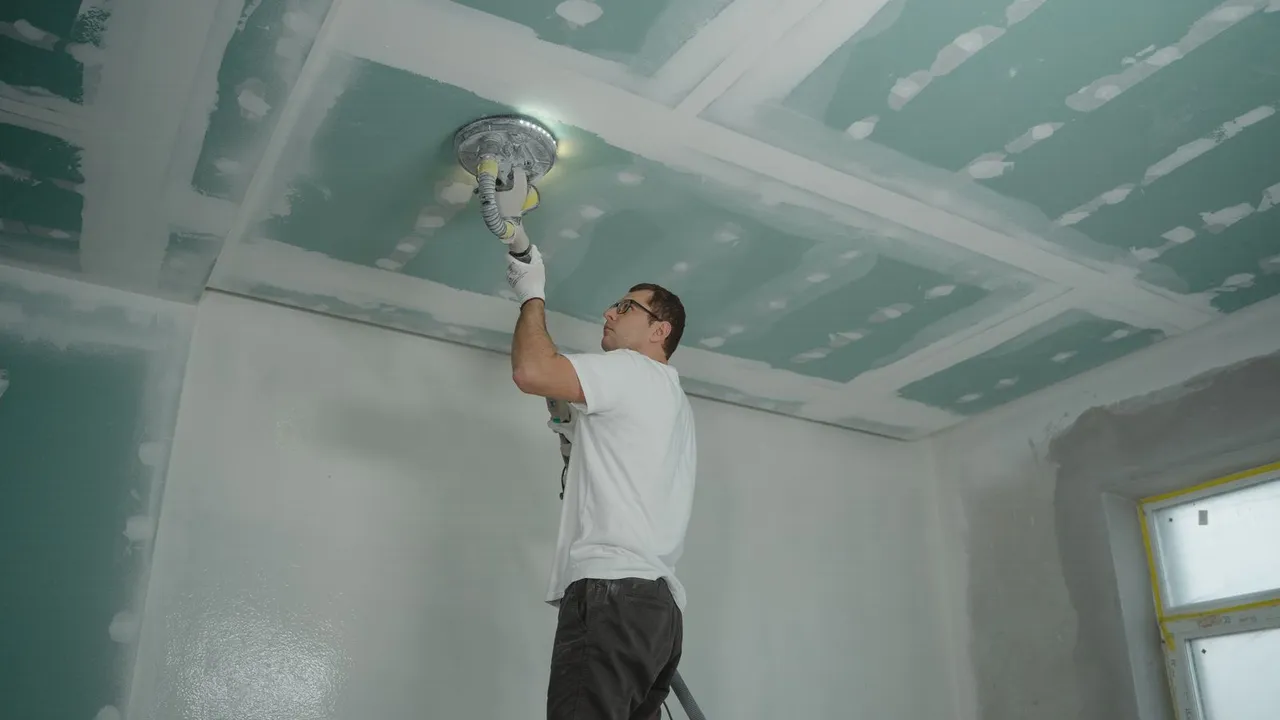
Wall and ceiling drywall access is the most common for supply lines and vents that run vertically through the home. The plumber cuts a section of drywall, makes the repair, and leaves the opening for a drywall finisher to patch, texture, and paint. A small repair might need a patch the size of a dinner plate. A larger one, such as replacing a length of pipe behind a kitchen wall, can mean removing a strip several feet long.
Exterior landscaping access applies to the water service line, the sewer line, and any pipe that runs through the yard. The plumber digs a trench or a pit to reach the pipe. Sod, gravel, drip irrigation, and plant roots all have to be moved or cut. A trenchless method can reduce the digging by pulling a new liner or pipe through the old one, but it still needs a small entry and exit pit at each end.
Concrete slab access applies when the pipe runs under the floor of the home. The plumber marks the line, saws through the concrete, breaks it out, digs down to the pipe, makes the repair, then backfills and patches the concrete. This is the most disruptive path, and it is the one homeowners ask about most.
How the type of pipe material and its age shape how much access a repair requires
Older pipe material usually means more access, because a failing pipe is often replaced in a longer run rather than patched at one point. A single pinhole leak in copper can sometimes be repaired in place. A run of galvanized steel that has rusted from the inside may need to be replaced along its length, which means opening more wall or floor.
Pipe material also decides whether a trenchless option is available. A cracked clay or cast iron sewer line can often be lined or replaced by pulling a new pipe through the old one, which limits the digging to two pits. A collapsed or offset line may not accept a liner, and that forces a longer open trench.
Age matters because of what the pipe has been through. A pipe that has already been repaired several times tends to fail again nearby. When a plumber opens a wall or slab and finds corroded or scaled pipe, the sensible repair is often to replace the whole accessible section while it is open, rather than patch one spot and reopen the same wall later.
The material of the pipe does not change the access path, but it changes the length of that path. A homeowner should ask what material the line is made of and whether a partial or full replacement is being proposed, because that is what drives the size of the opening.
Following the water supply system from the meter to the fixture and where it hides inside a home
The water supply system starts at the meter, runs a main line to the home, and branches to every fixture. The main line is usually buried in the yard. Once it enters the home, it runs through walls, ceilings, and sometimes under the slab to reach kitchens, bathrooms, and hose bibs.
A leak on the main line between the meter and the home is an exterior access job. A leak on a branch line inside a wall is a drywall job. A leak on a line that runs under the slab is a slab job. The same system produces all three access paths depending on where the failure sits.
Supply lines are pressurized, so a leak tends to show itself as a wet spot, a drop in pressure, or a water bill that climbs. The visible symptom is often not where the pipe has failed. Water travels along the path of least resistance, so a stain on a ceiling can come from a pipe several feet away.
A plumber locates the leak before opening anything, using pressure testing, acoustic listening, or thermal imaging. That locating step is what keeps the opening as small as possible. The more accurately the leak is pinpointed, the less drywall or concrete has to come out. How does the plumber diagnose a hidden leak, clog, or sewer issue before recommending repair or replacement? explains that process in detail, and our guide to whether insurance covers a repipe or slab leak repair covers what happens after the diagnosis.
Tracing the drainage system and sewer system underground and what sits above those buried lines
The drainage system carries wastewater from fixtures to the sewer, and the sewer system carries it off the property. Both rely on gravity, so they run with a slight downward slope, and that slope usually takes them under the floor and out through the yard.
Under the home, drain lines may run in a shallow trench below the slab. Outside, the sewer line runs from the home to the municipal connection or to a septic system. What sits above those buried lines decides how hard they are to reach. A sewer line under a lawn is a straightforward dig. The same line under a concrete driveway, a patio, a mature tree, or a retaining wall is a much bigger job.
Root intrusion is a common cause of sewer problems in older neighborhoods with mature landscaping. Tree roots find the moisture at a joint or a crack and grow into the pipe. Clearing the roots may be enough for a while, but a line that keeps clogging in the same spot often needs repair or replacement.
A camera inspection shows where the pipe has cracked, bellied, or been invaded by roots. That inspection is what tells the plumber whether the access will be a small pit at one point or a longer trench along the run. Without it, the size of the excavation is a guess.
Why water heaters, softeners, and treatment equipment create their own access needs
Water heaters, water softeners, and water treatment equipment create access needs of their own because they connect to both the water supply and, for gas units, the gas plumbing. A water heater replacement usually needs clearance around the unit, and sometimes a new pan, drain line, or venting change.
A water heater sits in a garage, closet, or utility space. Replacing it is mostly an above-ground job, but the connections, the vent, and the drain pan have to be brought up to current code. If the unit sits in a tight closet, the access may mean removing a door or a shelf to get the old unit out and the new one in.
Water softeners and water treatment systems add equipment that has to be plumbed into the supply line. Installing one may mean cutting into a wall or a line to add a branch, plus a drain for the regeneration water. A softener also needs a place to discharge, which can mean running a line to a drain or outside.
These systems are also part of the long-term access picture. Hard water leaves mineral scale inside pipes and equipment, and scale builds up over years. A home with hard water and no softener tends to see more scale-related failures, and those failures can eventually require opening a wall or a slab to replace a scaled line.
How a leak is located before anything is opened, and how accurate that locating really is
A leak is located before anything is opened by testing and listening, and the accuracy of that locating decides how small the opening can be. Plumbers use pressure tests to confirm which section of the system is losing water, acoustic equipment to listen for the sound of escaping water, and thermal imaging to see temperature differences caused by a leak.
Locating is accurate enough to aim an opening, but it is not a guarantee. A leak can travel along a pipe, a joist, or a slab before it shows. The plumber may find the leak a foot or two from the mark. That is why a repair often includes a small amount of exploratory opening, and why the final patch can be a little larger than the original mark.
For slab leaks, locating is especially important because concrete is expensive to cut and patch. A plumber who pinpoints the leak can often open a small section rather than a large one. If the leak is under a finished floor, the flooring has to come up first, and that adds to the access.
A homeowner can help by reporting everything they have noticed: where the water shows, when it appears, whether the meter spins with everything off, and whether the floor feels warm. Those details narrow the search and reduce unnecessary opening. Slab Leak Repair covers what happens once a slab leak is confirmed.
What a clog tells you about access, and when clearing it stays entirely above ground
A clog tells you where the blockage is likely sitting, and many clogs can be cleared entirely above ground with no demolition. A single slow sink or a backed-up toilet points to a blockage in the branch line close to the fixture. A clog that affects several fixtures at once points to the main drain or the sewer line.
Above-ground clearing means working through the fixture, a cleanout, or an accessible drain opening. A cleanout is a capped access point built into the drain line, and it lets a plumber reach the main line without opening a wall or floor. Many homes have one outside near the foundation and sometimes one inside.
When the clog is in the main sewer line and a cleanout is available, the work stays above ground. When there is no cleanout, or when the blockage is beyond the reach of the equipment, the plumber may need to open the line or dig to reach it. A camera inspection shows whether the clog is a simple blockage or a sign of a broken or root-filled pipe.
A clog that keeps returning in the same place is the signal that access may be needed. A one-time blockage from grease or wipes is usually cleared and forgotten. A line that backs up every few months is telling you the pipe itself has a problem, and that problem may require opening the line to fix.
How hard water and water softener or treatment equipment change the access picture over time
Hard water changes the access picture over time because the minerals in it leave scale inside pipes and equipment, and scale narrows the pipe and stresses joints. Water in this part of the desert is typically hard, often in the range of 15 to 25 grains per gallon or more, which means a home without treatment is constantly depositing mineral scale.
Scale does not cause a leak by itself, but it contributes to the conditions that do. A scaled water heater works harder and can fail at the tank or the fittings. A scaled supply line loses pressure and can develop pinhole leaks. A scaled drain line catches debris more easily and clogs more often.
A water softener or water treatment system removes or reduces the minerals before they reach the plumbing. That slows scale buildup and can extend the life of the water heater, the fixtures, and the pipes. It does not reverse scale that is already there, and it does not repair a pipe that has already failed.
For a homeowner, the practical point is that treatment is a maintenance decision that affects future access. A home with treated water tends to need fewer scale-related repairs, and fewer repairs mean fewer openings. Once a pipe is scaled and failing, treatment will not save it, and the access to replace it is the same as any other repair.
Reading the signs that separate a small patch job from a full wall, yard, or slab opening
The signs that separate a small patch from a full opening are about how many fixtures are affected, where the water shows, and whether the problem keeps coming back. A single fixture with a slow drain is usually a small job. Multiple fixtures backing up at once, water appearing far from any fixture, or a repair that has already been done once in the same place usually means a larger opening.
A wet spot on a wall near a fixture is often a small drywall patch. A wet spot on the floor in the middle of a room, with no fixture nearby, often points to a line under the slab. A damp patch in the yard along the sewer run points to the exterior line. The location of the symptom is the first clue to the access path.
A repair that has been done before in the same spot is a warning. If a plumber patched a leak in a wall two years ago and the wall is wet again, the pipe is likely failing along its length, and the next repair should replace more of it. Reopening the same wall twice costs more than opening it once and doing the job properly.
Age and material are the other signs. A home with original galvanized supply lines or an old clay sewer line is more likely to need a larger opening than a home with newer pipe. A homeowner who knows the age and material of their lines can predict the scale of a repair better than one who does not.
What a homeowner can reasonably expect to be put back, and what usually is not
A homeowner can reasonably expect the plumbing repair itself to be complete and the opening to be left safe, but the finish work is usually a separate job. Plumbers open the surface, fix the pipe, and leave the opening ready for a drywall finisher, a concrete contractor, or a landscaper to restore.
Drywall is usually patched by a drywall finisher, not the plumber. The plumber may replace the cut section or leave it open, depending on the arrangement. Texture matching and paint are almost always the homeowner's responsibility or a separate trade. A homeowner should ask up front who closes the wall.
Concrete slab openings are typically backfilled and patched with concrete, but matching a finished floor is separate. Tile, laminate, and hardwood are flooring trades. The concrete patch may be left slightly proud or rough, and the flooring contractor levels and covers it.
Landscaping is usually the homeowner's responsibility. Sod, plants, irrigation lines, and gravel that were moved for a trench are not automatically restored. A homeowner should expect to re-sod or re-plant the disturbed area, and should ask whether the plumber backfills and compacts the soil before leaving.
Some things are rarely put back by anyone but the homeowner: paint, flooring, fencing, and decorative landscaping. Knowing this before work begins prevents a surprise afterward.
Questions to ask before work begins so the scope of access is clear from the start
The questions to ask before work begins are about where the pipe is, how the plumber will reach it, and who closes what. A homeowner who asks these questions gets a clear scope before any surface is opened.
Ask where the problem is located and how the plumber knows. Ask whether the access will be through drywall, the yard, or the slab, and roughly how large the opening will be. Ask whether the repair is a patch or a replacement of a longer section, and why. Ask who is responsible for the patch, the concrete, and the landscaping.
Ask whether a camera inspection or a locating test will be done first, because that step keeps the opening small. Ask whether the work needs a permit, since some plumbing work does and some does not. Ask what the plumber will do if the problem turns out to be larger than expected once the surface is open.
A written scope that names the access path and the finish responsibility is the best protection. It separates the plumbing work from the restoration work, so neither is a surprise. How does a homeowner get started, and what should they have ready when they call? covers what to have on hand before the first conversation.
For more on how repairs are planned and explained, the blog covers related topics. When a leak or break is confirmed under a slab, or when a line has failed and the access is beyond what a homeowner can manage, a licensed plumber is the right next step. Plumber Sun City can be reached at 6234321414.
Frequently asked questions
How much drywall, landscaping, or slab access should a homeowner expect during a repair?
Expect the smallest opening that reaches the pipe, which can range from a small drywall patch to a section of slab or a trench in the yard. The amount depends on where the pipe runs, what it is made of, and how accurately the problem was located before anything was opened.
What is included in the price of a repair that requires access?
The price usually includes locating the problem, opening the surface, the plumbing repair itself, and backfilling or a basic patch. Finish work such as drywall texture, paint, flooring, and landscaping is typically separate and is often the homeowner's responsibility.
What is a fair price for a repair that involves opening a wall, yard, or slab?
There is no single fair price, because the cost depends on the access path, the length of pipe replaced, and whether a permit is needed. A fair price is one that itemizes the access work separately from the plumbing repair, so the homeowner can see what each part costs.
How can I keep the cost of access down?
Ask for locating and a camera inspection first, because accurate locating keeps the opening small. Ask whether a trenchless method is possible for buried lines, and ask whether replacing a longer section now avoids reopening the same wall or slab later.