
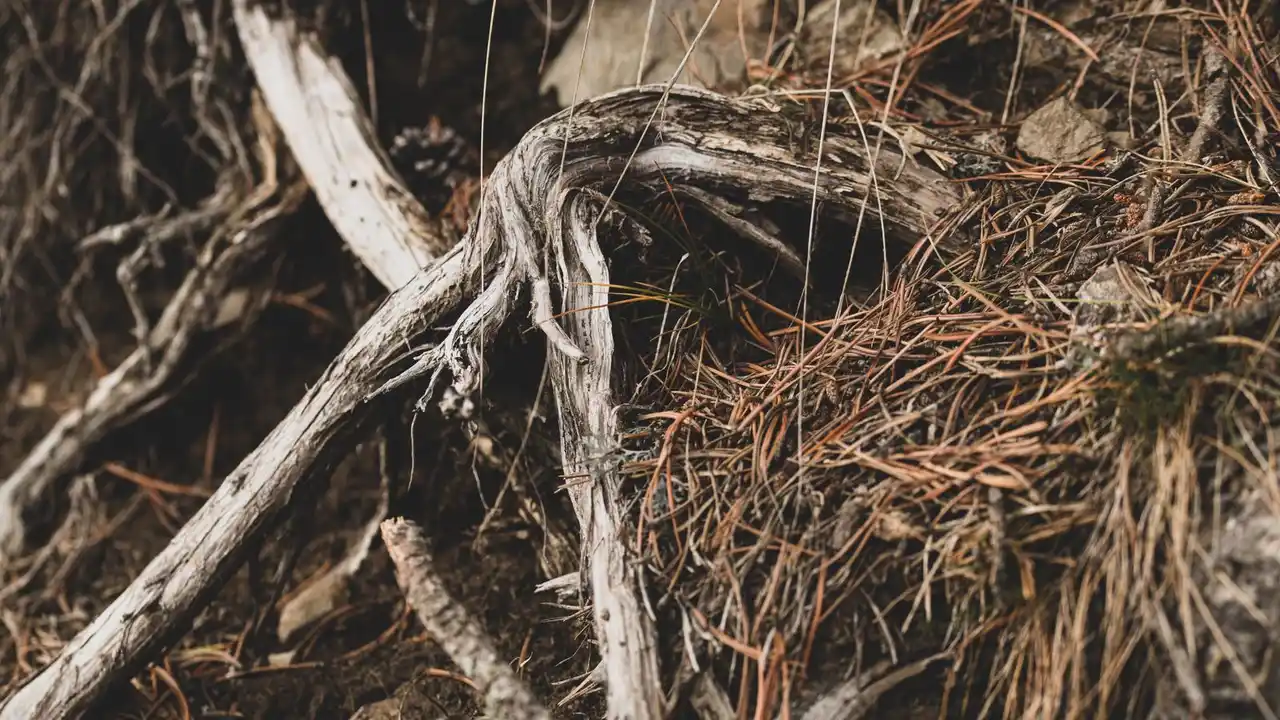
Root intrusion into sewer laterals in mature-landscaped retirement communities and how trenchless repair avoids destroying landscaping
Root intrusion into a sewer lateral is tree or shrub roots entering the pipe through a crack, joint, or loose connection and filling it with a mat of fine roots that catches waste and causes clogs. Trenchless repair fixes the pipe from the inside through existing access points, so the lawn, shrubs, trees, walkways, and irrigation lines above the lateral stay in place.
This page explains what root intrusion is, why mature landscaping makes it worse, what the warning signs are, and how a trenchless repair decision gets made when the pipe, the roots, and the landscaping all matter. For more on related topics, see our blog.
What root intrusion into sewer laterals actually is and why mature landscaping makes it worse
A sewer lateral is the pipe that carries wastewater from a home to the public sewer main, and root intrusion is what happens when roots grow into that pipe and turn it into a filter that traps solids. The pipe is buried, wet, and warm, which is exactly the environment roots seek out. See our sewer services for more.
Roots do not usually break a healthy pipe on their own. They enter through an existing defect: a hairline crack, a separated joint, a hub that has shifted, or a section of pipe that has already thinned. In a mature landscape, the root network around that defect is larger and closer, so the same small opening that would stay quiet in a new yard becomes an active clog in an older one.
Mature landscaping makes root intrusion worse in three ways. The root system is bigger, so more roots are within reach of the pipe. The soil has been irrigated for decades, so roots concentrate in the moist band around the lateral. And the pipe itself is older, so it has more joints and cracks for roots to find.
Root intrusion is a plumbing problem, but it sits in the sewer system rather than the water supply system. The water supply system brings clean water in under pressure; the sewer system takes wastewater out by gravity. Roots only care about the second one.
How tree and shrub roots find their way into a buried sewer lateral
Roots find a sewer lateral by growing toward moisture and oxygen, not by seeking the pipe on purpose. A buried pipe leaks a small amount of water and vapor at every joint, and that moisture draws fine roots through the soil toward the pipe.
Once a root tip reaches the pipe, it can enter through any opening wider than the tip. Common entry points are a cracked bell, a joint that has separated by a fraction of an inch, a fitting that was never fully seated, and a section of clay or cast iron pipe that has corroded through.
Inside the pipe, roots branch into a mass of fine hair roots that catch toilet paper, grease, and solids. The mass grows slowly at first, then faster as it traps more material and holds more moisture. A line that drains fine for years can start backing up within a season once the mat is thick enough.
Roots also follow the pipe along its length. A single entry point can support root growth for many feet downstream, which is why a camera inspection matters more than the point where the snake stopped.
Why older retirement-community lots have unusually dense root networks around the sewer line
Older retirement-community lots often have unusually dense root networks because the landscaping has had decades to mature and the lots are small, so trees and shrubs sit close to the sewer lateral. A tree that was a sapling when the home was built can have a root system that spans the entire lot. If you need help, contact us.
These lots also tend to be single-story and slab-on-grade, which means the sewer lateral runs under the slab and out through the yard at a shallow depth. Shallow burial puts the pipe in the same soil zone where roots are most active.
Decades of irrigation concentrate roots along the lateral. In a hot desert climate, the soil away from the irrigation zone stays dry, so roots grow toward the one consistently moist band in the yard, which is often the sewer trench.
The result is a yard where the pipe and the root system occupy the same space. That does not mean every mature lot has root intrusion, but it does mean the conditions that cause it are common.
The warning signs of root intrusion in a sewer lateral before any backup happens
The earliest warning sign of root intrusion is a slow drain that keeps coming back, especially in the lowest fixtures in the home. A toilet or tub that drains slowly, gurgles, or backs up briefly and then clears is often reporting a partial root blockage downstream.
Other signs include a sewer smell in the yard or near a floor drain, repeated clogs in the same fixture, and water pooling in a low spot in the lawn above the lateral. None of these signs is proof of roots, but together they point to a sewer line that needs to be looked at.
A camera inspection is the only way to confirm root intrusion. A snake or cable can clear a clog without showing what caused it, which is why a line that keeps clogging should be inspected rather than snaked again.
If sewage is backing up into the home, that is no longer a warning sign. It is a job for a licensed plumber, and the line should not be run again until it has been cleared and inspected.
Why root intrusion keeps coming back after a cable or snake clears the line
Root intrusion keeps coming back after a cable or snake clears the line because the machine cuts the roots but leaves the opening they grew through. The pipe is still cracked, the joint is still separated, and the root system is still alive around it.
Cut roots respond by growing back denser. A root that is cut at the pipe wall sends out new tips from the cut end, and those tips find the same opening again. In a mature landscape, the regrowth can refill the line within months.
Snaking also does not remove the fine root mass that clings to the pipe wall. A cable clears the center of the pipe enough to restore flow, but the walls stay rough, which gives solids something to catch on and gives new roots something to hold.
This is why repeated snaking is a maintenance cycle, not a repair. It restores flow each time, and each time the underlying defect is still there.
How trenchless repair reaches a buried sewer lateral without digging up the yard
Trenchless repair reaches a buried sewer lateral by working through the pipe itself, using existing access points such as a cleanout or a small excavation at each end. The pipe is cleaned, then rebuilt or replaced from the inside, so the surface of the yard is not opened along its length. Learn more about sewer repair.
The process usually starts with a camera inspection to map the pipe, locate the defects, and confirm the pipe is a candidate for trenchless work. The line is then cleaned, often with high-pressure water, to remove roots, scale, and debris so the repair can sit against a clean wall.
From there, the method depends on the pipe. A liner can be pulled or inverted into the pipe and cured in place to form a new inner wall. A bursting head can be pulled through to break the old pipe outward while pulling a new pipe in behind it.
Trenchless repair is not always possible. A pipe that has collapsed, bellied, or lost its slope may need open excavation, and a line with a severe offset may not accept a liner. A camera inspection and a plumber's assessment decide that.
Pipe lining versus pipe bursting: two trenchless paths through the same root problem
Pipe lining and pipe bursting are the two main trenchless paths, and they differ in what happens to the old pipe. Lining leaves the old pipe in place and creates a new pipe inside it. Bursting breaks the old pipe outward and pulls a new pipe through the same path.
Lining suits a pipe that is cracked, root-damaged, or scaled but still structurally sound and roughly the right size. The liner covers the defects and closes the openings roots were using, so the root problem does not return at those points.
Bursting suits a pipe that is badly deteriorated, undersized, or has multiple defects along its length. It replaces the pipe rather than covering it, and because the bursting head expands the path, it can sometimes increase capacity.
The choice depends on pipe material, condition, diameter, depth, and the number of bends. A plumber who has seen the camera footage can say which method fits, and both methods avoid the trench that open replacement would require.
What trenchless repair leaves untouched in a mature landscape
Trenchless repair leaves the mature landscape largely untouched because it does not open a continuous trench along the lateral. Lawns, ground cover, shrubs, trees, walkways, driveways, and irrigation lines above the pipe stay where they are.
That matters most where the value of the landscaping is high or the cost of replacing it is high. A mature tree that took decades to grow cannot be replaced by a new planting, and a trench through a root zone can damage or kill it.
Trenchless work still needs access at the ends, so a small excavation at a cleanout or at the connection point is normal. The difference is scale: a few small openings instead of a trench the length of the yard.
The landscaping is not the only thing preserved. A trenchless repair also avoids disturbing the soil structure and the irrigation system that a full excavation would cross.
How soil, water supply, and hard water interact with sewer laterals and the rest of a home's plumbing
Soil, water supply, and hard water interact with a home's plumbing in ways that show up in different parts of the system. Hard water carries dissolved minerals, often in the range of 15 to 25 grains per gallon in desert areas, and those minerals deposit as scale inside pipes and fixtures.
Scale narrows the inside of water supply pipes and coats water heater elements, which shortens the life of a water heater and raises the energy needed to heat the same water. Scale does not cause root intrusion, but it does make the whole system work harder.
In the drainage system, scale and grease give solids something to catch on, which makes a partially root-blocked pipe clog sooner. A pipe that is already narrowed by roots and rough with scale reaches a blockage faster than a clean one.
Soil conditions affect the sewer lateral itself. Expansive clay soils can shift and crack a pipe over time, and those cracks become the entry points roots use. A leak in the water supply system can also saturate soil around the lateral and draw roots toward it.
Where root intrusion fits among the other problems a household plumbing system develops
Root intrusion is one of several problems a household plumbing system develops, and it is the one that most often gets mistaken for a simple clog. A clog is a blockage inside a pipe; root intrusion is a defect in the pipe that keeps producing blockages.
Other common problems include leaks in the water supply system, mineral scale from hard water, low water pressure, aging pipes that crack or corrode, and water heater failures. Each of these has its own cause and its own repair path.
The difference matters because the fix is different. A clog is cleared. Root intrusion is repaired. Treating root intrusion as a clog is what leads to the cycle of snaking and backing up that many homeowners recognize.
A camera inspection is what separates the two. It shows whether the pipe is blocked or damaged, and that determines whether the answer is cleaning or repair.
What a camera inspection reveals that a drain snake cannot
A camera inspection reveals the condition of the pipe, which a drain snake cannot show. The snake clears a path; the camera shows what the path looks like and what caused the blockage.
A camera shows cracks, separated joints, offsets, bellies, corrosion, scale, and root masses. It shows where roots are entering and how far the damage extends. It also shows whether the pipe is a candidate for trenchless repair or needs another approach.
The camera also locates the problem in the yard, which matters when the repair has to reach a specific point without disturbing landscaping. A recorded inspection gives the plumber a map of the line before any repair decision is made.
A camera inspection is not a repair. It is the step that makes the repair decision accurate, and it is the reason a line that keeps clogging should be inspected before it is snaked again.
How trenchless repair decisions get made when roots, pipe condition, and landscaping all matter
Trenchless repair decisions get made by weighing three things together: the condition of the pipe, the extent of the root intrusion, and the value of the landscaping above it. No single factor decides it.
Pipe condition comes first. A camera inspection shows whether the pipe is cracked but sound, or collapsed and out of slope. A sound pipe can often be lined; a failed pipe may need bursting or open replacement.
Root extent comes second. A single entry point may be handled with a localized repair, while roots entering along many joints may call for lining or replacement of the whole run. The camera shows which it is.
Landscaping comes third. Where the yard is mature and expensive to replace, trenchless methods are usually preferred because they avoid the trench. Where the pipe is shallow and the landscaping is simple, open replacement may be the more straightforward choice.
The decision is a plumbing judgment, not a sales one. A homeowner can ask to see the camera footage, ask what the pipe condition is, and ask which trenchless method fits and why before agreeing to anything.
Common questions about root intrusion and trenchless repair
What is root intrusion into sewer laterals in mature-landscaped retirement communities and how trenchless repair avoids destroying landscaping?
Root intrusion is roots entering a sewer lateral through a crack or joint and forming a mass that catches waste and causes clogs. Trenchless repair fixes the pipe from the inside through existing access points, so the lawn, shrubs, trees, and walkways above the lateral are not dug up.
How does root intrusion into sewer laterals in mature-landscaped retirement communities and trenchless repair avoids destroying landscaping work?
Roots grow toward the moisture that escapes from a buried pipe, enter through an existing defect, and branch into a mat that traps solids. Trenchless repair cleans the pipe, then either lines it or bursts and replaces it from the inside, which closes the openings roots used without opening a trench along the yard.
What should I know about root intrusion into sewer laterals in mature-landscaped retirement communities and how trenchless repair avoids destroying landscaping?
Know that repeated clogs in the same line are a sign of a pipe defect, not just a blockage. A camera inspection is what confirms root intrusion and shows whether the pipe can be lined, burst, or needs another approach. Trenchless methods preserve mature landscaping, but they depend on the pipe being a candidate.
Does snaking a sewer line remove roots for good?
No. Snaking cuts the roots but leaves the opening they grew through, so they grow back, often denser than before. Snaking restores flow; it does not repair the pipe.